
SUBSCRIBE:




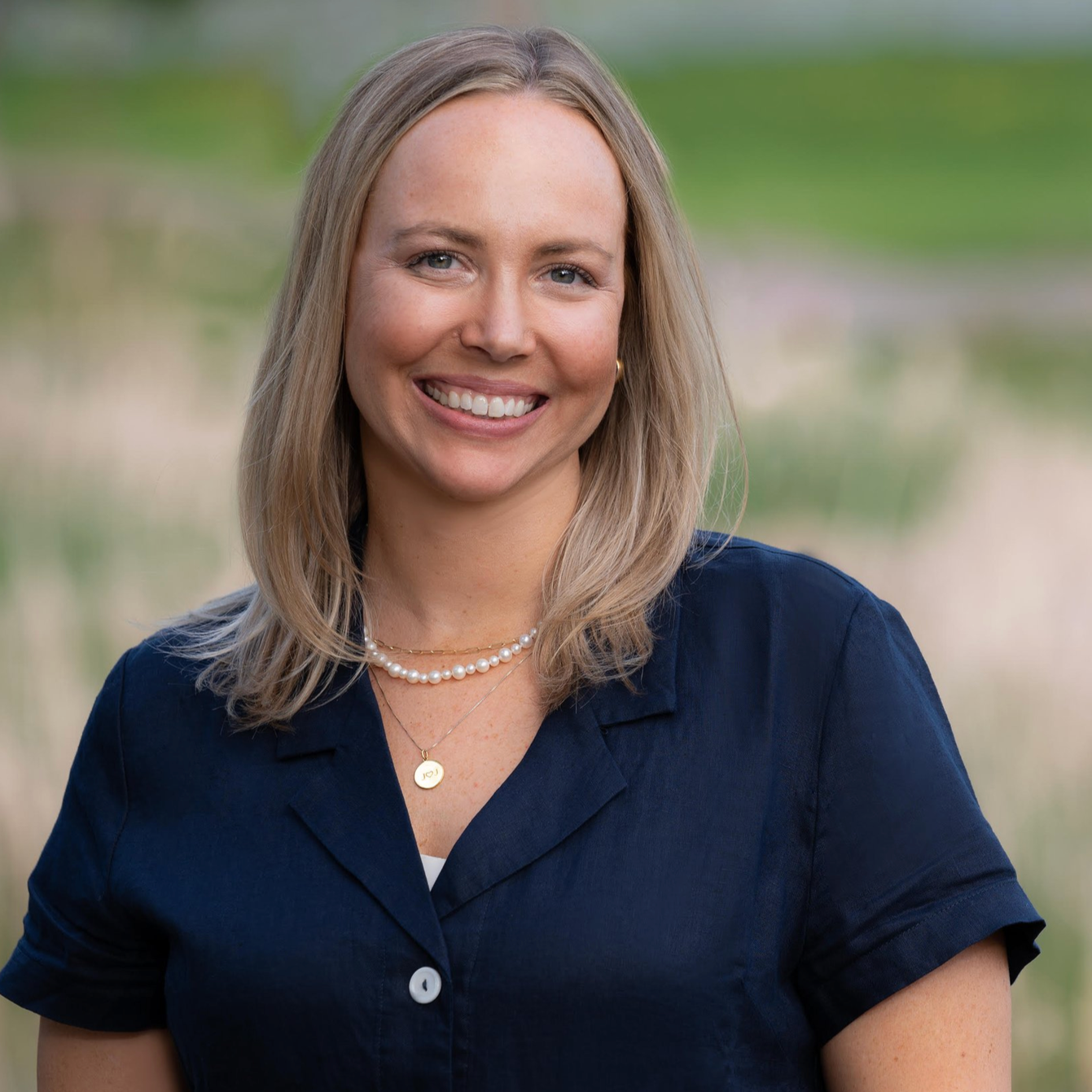
How this pastor became disillusioned with bridge-building
with Angela Denker
The latest from Beyond Polarization: Pastor Angela Denker says a focus on polarization may be holding the Church back from tackling bigger threats, like Christian Nationalism.
EPISODE NOTES
Our guest this episode is an ordained pastor and journalist who's traveled the country speaking to conservative Christians, and facilitating discussions about politics and division. But she's come to believer those efforts are ineffective, and shifted her focus to combating Christian Nationalism.
This is episode six in Making Peace Visible's special series, Beyond Polarization. In episodes 1 through 5, we spoke to Americans invested in bridging political divides through journalism, social media, higher education and in civil society. This episode, with a spotlight on religion, examines the limits of trying to find common cause with people you disagree with.
Rev. Angela Denker is an ordained Lutheran pastor and a journalist based in Minneapolis, Minnesota. She's the author of two books: Red State Christians (2019), and Disciples of White Jesus: The Radicalization of American Boyhood (2025). Having grown up with a mix of Baptist, Evangelical and mainline Protestant influences, Angela eventually embraced a more liberal Christianity and progressive politics.
While researching her first book, she saw some openness to dialogue and empathy for immigrants, for instance. But she says, by and large, efforts at bridge building between liberal and conservative Christians have fallen flat.
Her second book focuses on the threat of Christian Nationalism, particularly among young white men and boys. In this interview, Denker speaks about why she thinks there are more important threats to the country and the church than polarization. And she makes a case for why we should be paying more attention to the role of religion in American politics today. We also touch on Denker's experiences and writing during ICE's Operation Metro Surge in Minneapolis.
More from Angela Denker:
"I Am a Minneapolis Mother and Pastor, and I Know Where I Stand", The New Republic, January 2026
Writer and pastor Angela Denker investigates what's going on with young white men in America, interview by Sarah McCammon, March 2025
"The End of Dialogue?" Church Anew, December 2020
"Why I’m Teaching a Class on Political Dialogue When No One Wants to Talk to Each Other", Faith+Lead, February 2020
TRANSCRIPT
[00:00:00] Rev. Angela Denker: I think it's very clear America has not become more secular. We remain very shaped by religion and by religious trends. And I think that national media or leading Democrats sort of write off religion as, like, a third rail that shouldn't be touched. It's only personal. And there's been a failure to critique religious beliefs and understand, well, how do those religious beliefs really influence our politics?
Because they are right now [00:00:30]
[00:00:31] Jamil Simon: Welcome to Beyond Polarization, a special series from Making Peace Visible. I'm your host, Jamil Simon. This is episode six of the series, where we're focusing on religion. This episode will be different from the first five, where we spoke to people who are deeply invested in working across divides.
This time, I'm speaking with a pastor and a journalist who's become, well, a bit fed up with trying to build bridges, particularly between American Christians. Angela Denker [00:01:00] is an ordained Lutheran pastor and the author of two books, Red State Christians, published in 2019, and Disciples of White Jesus, which came out in 2025.
Having grown up with a mix of Baptist, evangelical, and mainline Protestant influences, Angela eventually embraced a more liberal Christianity and progressive politics. While researching her first book, she saw some openness to dialogue and empathy for immigrants, for instance. But she says, by and large, efforts at [00:01:30] bridge-building between liberal and conservative Christians have proven ineffective.
Her second book focuses on the threat of Christian nationalism, particularly among young white men and boys. I spoke to her about why she thinks there are more important threats to the country and the church than polarization, and she makes a case for why we should be paying more attention to the role of religion in American politics today.
Angela lives in Minneapolis. During Operation Metro [00:02:00] Surge, she held memorial services at her church for victims of ICE violence and wrote about her experiences. Angela, thank you so much for joining us today.
[00:02:10] Rev. Angela Denker: Thanks for having me.
[00:02:12] Jamil Simon: It's a pleasure. You've spent your career in recent decades trying to better understand conservative Christians, young Christian nationalists, and people who voted for Trump.
But does what you've been seeing and learning from your research resonate with aspects of your own upbringing? Tell us a little bit about your origins and your [00:02:30] early development as a Christian.
[00:02:32] Rev. Angela Denker: Yeah. So I am the granddaughter of a Lutheran pastor on my mom's side, and the daughter also of a father whose family was deeply steeped in Roman Catholicism, specifically in a German tradition in here in Minnesota.
So growing up, I thought that there were two kinds of Christians, Lutherans and Catholics, which is ... not very representative of American Christianity as a whole, which I [00:03:00] was learning as I grew older But I will also say, you know, even though I grew up primarily in the Lutheran Church, I grew up in a church that was very shaped by evangelicalism.
If we have megachurches in the Lutheran tradition, mine was sort of one. I was confirmed with 200 other kids. Most of the kids from my junior high school went to the same church I did. We had a band at our confirmation groups, and I also sort of dabbled in, you know, attending Southern Baptist Bible [00:03:30] camp, went to retreats that were held by evangelical churches in the area.
So there was this strong sense of broader Midwestern evangelical Christianity as a guide for understanding American life, specifically when it came to gender roles, sexuality, and I had to unpack much of that later on after entering seminary and becoming a pastor myself.
[00:03:54] Jamil Simon: You studied journalism in college and worked as a journalist for a few years, and then [00:04:00] you enrolled in seminary.
Going from journalism to the ministry is an interesting transition for anyone to make Now you're a pastor and an author, so you're still doing both. Given your work, I imagine one informs the other.
[00:04:14] Rev. Angela Denker: Yeah. You know, there's kind of a fight, i- if you will, a friendly fight between journalists and pastors about this phrase, which I believe guides both of our professions, and I've had both folks say, "Well, it originated with us."
But the phrase is probably familiar [00:04:30] to you as well. It's comfort the afflicted and afflict the comfortable. And certainly that's a guiding light for me as a journalist, but also as a pastor. You know, it's that balance between the gospel is comfort and the gospel is calling us to action for justice. And as you mentioned, we've lived through that in Minneapolis over the last few years and certainly during Metro Surge as well.
[00:04:53] Jamil Simon: Yeah. You said you entered seminary fairly conservative and came out with a more [00:05:00] expansive understanding of Christianity. What happened during those years?
[00:05:04] Rev. Angela Denker: So I entered in 2009 after having worked in Naples, Florida for a few years in sports writing. And I will say there's a number of us who come out of sports writing and enter ministry.
It's, it's a really- Really? ... interesting group. Yeah.
[00:05:18] Jamil Simon: I didn't know that that was a subset. It,
[00:05:21] Rev. Angela Denker: it is. And, you know, it varies. There's folks who go into more conservative traditions. There's other folks like myself who are mainline [00:05:30] pastors. But I think that there is sort of this grasping for truth as a journalist, as you know, and we also carry with us cynicism.
But there is, at its most pure form, in both religion and journalism, this sense that there's something outside of ourselves that we want to work towards and understand, and I think that same impetus that drives folks into journalism can also drive folks into seeking answers in religion and even becoming ministers ourselves.
[00:05:58] Jamil Simon: Hmm. In [00:06:00] 2013, you were ordained as a pastor in the Evangelical Lutheran Church in America. I'm not particularly familiar with different Protestant denominations, and our listeners may not be either. Would you describe the basic approach of religion as a practitioner and a pastor?
[00:06:16] Rev. Angela Denker: Yeah. So the ELCA is America's largest Lutheran denomination.
So like larger American Christianity, there's a broad spectrum of Lutheranism as well. I came to seminary [00:06:30] right after the ELCA had voted in 2009 as a denomination in a very Midwestern sort of milk toast ... declaration to open some acceptance and inclusion for LGBTQ people. It was not a broad-reaching endorsement or acceptance of LGBTQ folks at that time, and I think that's partially why as a denomination we've struggled to have a stronger voice on justice issues in [00:07:00] general because of, you know, I'm sure we'll get into this, but this fear that saying the truth is going to lead to further polarization.
I think we, we've seen that in national news media. We've seen it in religion as well. And as a church, what it's done is sort of weaken our proclamation and our own sense of identity. At the time, I was more conservative. I was not affirming of LGBTQ inclusion in ministry in the church, and [00:07:30] I am grateful, you know, that I had folks both as professors, as theologians, walk me through Bible passages, walk me through ideology.
And also, significantly, when I went on my internship, I served in Las Vegas at Community Lutheran Church, which was also a Lutheran church that functioned more almost like an evangelical mega church.
[00:07:52] Jamil Simon: Wow
[00:07:53] Rev. Angela Denker: We had a country western gospel service- Mm-hmm ... featuring The Honky Tonk Angels. It was a really lively place at the time, [00:08:00] and our-.
[00:08:01] Jamil Simon: I bet.
[00:08:02] Rev. Angela Denker: Yes, yes. And you know, Vegas was sort of booming at that time, too, coming out of the recession. But our worship leader was a gay man and was somebody who I immediately connected with, and hearing his stories and just the incredible amount of talent that he brought to that work, this was someone who had worked on Broadway, someone who was an actor and a leader in some of the biggest shows on the Las Vegas Strip.
And he told me about how [00:08:30] he had been told at other churches in Las Vegas, you know, "Because you're gay, we just want you to sit in the back row. We don't want you up front." And I thought, "Gosh, what a terrible way to quench the Holy Spirit."
[00:08:42] Jamil Simon: Boy, I'll say.
[00:08:44] Rev. Angela Denker: Really. So getting, getting to know Bruce and a friend of his, Greg, who was also a leader at our church at the time and is now an ordained pastor himself in a different denomination, they really gave me the space to change, and I was open to that revelation.
[00:09:00] And I think what's been discouraging for me in working in cross-political dialogue, cross-religious dialogue in America over the last almost decade Is that I have not seen in a lot of folks that willingness to change and listen.
[00:09:15] Jamil Simon: That's very important.
[00:09:17] Rev. Angela Denker: Yes. The, a real hardening. And so what I experienced has not been possible.
I have a few anecdotal stories, you know, and things where I've seen change occur and openness occur, but it's become much [00:09:30] more difficult.
[00:09:31] Jamil Simon: Hmm. One quick question. Are female pastors, uh, does that go back a long way or is that a recent, uh, change?
[00:09:39] Rev. Angela Denker: Yes, I believe it was the late '70s. Now, as many of us know who've come into professions as sort of minorities, um- There's a first person, there's a, an acceptance, but there's also still a lag.
So, you know, there are still churches within my denomination that don't want women [00:10:00] pastors, that will tell leadership, "Please do not send us a candidate who's a woman." In the same way, you know, that happens to gay pastors, it happens to Black pastors. While I'm very grateful to serve an egalitarian denomination, growing up, you know, I had a, a pastor who was a man, but his wife was also a pastor in our denomination.
But I also, you know, the most frequent critique I get on my work is just the fact that I shouldn't exist as a woman pastor. It's not really about the substance of my writing. [00:10:30] It's just people who are offended that I am daring to exist a- as a woman pastor.
[00:10:35] Jamil Simon: Wow. That cuts to the core, doesn't it?
[00:10:38] Rev. Angela Denker: Right.
[00:10:39] Jamil Simon: But, um, well, bridging political divides is something you've been passionate about in the past, and one reason we wanted to talk to you is that your relationship to bridge-building has become more complicated over time.
[00:10:50] Rev. Angela Denker: Yeah. You know, and I, I think that a lot of us who's sort of been through it, we came into this work of reconciliation, whether it's over racism or gender [00:11:00] or politics, we came into it sort of starry-eyed and definitely naive. And I think those of us who've tried to do this work have really often been burned in the past.
And what I've seen specifically in religious circles is there's this sense that if we... And it's, it's really determined by race as well. You know, if we as a bunch of nice white people can get together in a church and talk together, then that's gonna somehow defeat polarization, when [00:11:30] there's really an unwillingness to reckon with the depths of hatred and violence that's being surfaced right now in right-wing Christian circles, in MAGA circles, within the second Trump administration.
And so without really reckoning with the danger in the room, I think we're just sort of working around the edges. And maybe it's because I'm a Midwesterner, but there's a lot of sort of white politeness that covers up these deep wounds and divisions that have yet to be healed. [00:12:00] Where my frustration sometimes comes from is, you know, people with a lot of power and influence, whether it's in media or in journalism, they still seem hesitant to grapple with what's really going on.
As, you know, Minneapolis residents, we certainly witnessed that level of violence during Metro Surge with ICE coming in. We've seen, you know, another person shot by ICE in Texas. He was taken to a detention center with a bullet still in his back. And so when I [00:12:30] hear a lot of the rhetoric continuing to come out of a lot of sort of Democratic leadership, I just don't think it resonates on the ground level.
It certainly doesn't resonate with conservatives. And I think that those of us who, you know, have spent our families, our communities that have been really shaped by conservatism and shaped by religious conservatism, we feel like our concerns haven't really been heard because so many folks in power, [00:13:00] in leadership, with great influence, have not really understood what's happening in religious conservative communities, particularly for women, or for gay people, or for anyone who doesn't fit the mold of what these communities have considered to be the ideal way to live.
[00:13:18] Jamil Simon: Take us back to the aftermath of the 2016 election. This was a pivotal time for you. Donald Trump had just won. You voted for Hillary Clinton, but you decided to reach out to people who had voted for [00:13:30] Trump to try and understand where they were coming from. What made you want to listen to these other points of view?
[00:13:36] Rev. Angela Denker: So at the time, in 2016, I was pastoring in Orange County, California, in Yorba Linda, which is the hometown of Richard Nixon. So this is a community that's deeply shaped by Christian conservatism. And the church that I was serving, while it was Lutheran in name, most of our staff came out of evangelicalism.
So just to paint the picture for you a little bit, at the time also, I was serving with another [00:14:00] pastor who was a man about 30 years older than me, and a lot of folks would assume that we were married just because that was the only way they could wrap their brain around a woman being up there. So after Trump was elected, you started to see people, in a sense, come out as more deeply conservative than they maybe would have before, and particularly with language: language around women, language around race.
Some of our neighbors at the time, one of my neighbors was [00:14:30] a Black woman. She was a single mom, and her son experienced horrific racist incidents just in the days following Trump's election. It was this sense of permission-giving for people to come out in a different way. At the same time, you know, with the failure of Hillary's campaign, there was a sense that Democrats, many, you know, leading American politicians and media were really missing the mark with [00:15:00] understanding a wide swath of Americans.
And so I will say, you know, when I first pitched what would become my first book, Red State Christians, I wanted to focus specifically on Orange County, California. You know, home to Rick Warren, home to many very influential evangelical churches, also home to Stephen Miller. To many of the architects of Trump's administration, to MAGA's rise, come out of Southern California.
So I pitched a book called Bibles and Boob Jobs focusing- ... on [00:15:30] Orange County Christianity, and just the elevation of aesthetics that we're seeing now in the Trump administration. Orange County Christianity was really the progenitor of a lot of that. You know, there was a certain look for women, for men, and Trump really prizes that aesthetic.
So that was my book that I pitched, and then it really was the publisher who came and said, "We would like you to take a look at the whole country." At the time, you know, miraculously, they gave me a travel budget, and it was a really beautiful [00:16:00] opportunity, especially in those years right before COVID, to really experience a wide swath of America and to understand regionally what was going on politically.
Because America still remains such a regional country, and the ways we understand politics is very regional.
[00:16:15] Jamil Simon: Right. And what did you come to understand about Christian Trump voters that most Americans outside of those circles didn't understand?
[00:16:23] Rev. Angela Denker: Yeah. I mean, anytime you ask an author to put my book into a short answer you'll probably get a longer answer than you [00:16:30] want here.
But I do think, you know, when I was writing Red State Christians, I thought that the aspect of class and understanding class in America was being underplayed. I think that's still a relevant point. I think that Trump has manipulated that, this sense that many White Americans had that Democrats were for, quote, "the elites."
Again, all that language has been so weaponized to almost become meaningless now, you know, because the elites [00:17:00] can be a dog whistle for Jewish people, it can be an anti-Semitic way to talk. But I think another important insight that maybe feels second nature to me at this point, but I think maybe a lot of folks still haven't fully grappled with, is just the important central role of religion in a country that has, according to the data, become more secular.
And so I think it's really important to not interpret the data of decreasing in adherence rates, decreasing [00:17:30] worship attendance as America becoming a more secular country. I think it's very clear America has not become more secular. We remain very shaped by religion and by religious trends. And I think that national media or leading Democrats sort of write off religion as, like, a third rail that shouldn't be touched, it's only personal, and there's been a failure to critique religious beliefs and understand, well, how do those religious beliefs really influence our [00:18:00] politics, because they are right now.
And, you know, Project 2025 comes out, many American historians have documented this comes out of a long organizing, political organizing effort on the behalf of the Christian right over decades. So I think that continuing to grapple with the strength of political organizing in religious communities and the ways that people's Christianity is really inseparable from their politics, particularly on the right.
[00:18:29] Jamil Simon: [00:18:30] Around the time you were researching and writing Red State Christians, what did you believe was driving political polarization? Did you think that Americans primarily needed more contact with people unlike themselves, more accurate information about one another, or something else?
[00:18:46] Rev. Angela Denker: Yeah, I mean, all of the above.
And unfortunately, I think we're still lacking that. My hope with Red State Christians, and I do think it does this work- And actually, I have to say the publisher picked the subtitle Understanding the [00:19:00] Voters Who Elected Donald Trump. I wanted the subtitle to be Meet the Voters Who Elected Donald Trump.
[00:19:05] Jamil Simon: That's so different.
[00:19:07] Rev. Angela Denker: Yeah. We have to meet one another first before we can understand each other, and I think there's still a lack of that happening. You know, again, we see some sources of hope, particularly in rural communities across the Midwest where large immigrant communities have moved in. We've seen that place where people see one another as neighbors.
I mean, we've seen it in Springfield, Ohio- Yeah ... and the community [00:19:30] there's defense of Haitian migrants there But yeah, I had a hope at the time that folks from across the political spectrum would read and meet the people in my book, because not everyone who you'll meet in Red State Christians is, you know, a MAGA Trump supporter.
There's also, I think, really important stories coming out of, especially, you know, Black folks, people of color who were working in mega churches, evangelical churches, conservative churches. They were brought [00:20:00] in under this, at the time, movement towards what they were calling racial reconciliation within evangelical churches like the Southern Baptist Convention.
And what happened to these people was a real sense of betrayal after Trump's election, because all of a sudden it was really this sense of, "Oh, we actually don't care about racism, and we were just kind of doing this as a PR move." Which I think we saw broadly, you know, after the murder of George Floyd, and this [00:20:30] embrace very briefly by corporations of anti-racism efforts.
That was so quickly abandoned, particularly after Trump's second election, but even before that. So I think that's the place where a lot of Americans find ourselves who have worked towards ending polarization. And so that's why I think it's really important, especially for Christians, to understand, and I think journalists as well, the danger is not polarization in and of itself.[00:21:00]
The danger is failing to come to a shared truth, that people can acknowledge a shared reality. I think that's really the danger. And so if we focus on, well, polarization is the problem, you know, if people are not polarized against hatred or violence, that's a bad thing. We, we need polarization sometimes.
Jesus has a famous quote in Matthew 10:34. He says, "Do not think that I have come to bring peace to the earth. I have not come to [00:21:30] bring peace, but a sword." And sometimes that's translated as, "I've come to bring division itself." So I think there's a real need for, especially, you know, white Christians to grapple with, we don't wanna become the white moderates in Martin Luther King Jr.'s letter to Birmingham Jail in this effort to sort of end polarization.
I think we've worried too much about hurting the feelings of conservatives, and we haven't worried enough about those who've been hurt by the violent policies of [00:22:00] this administration.
[00:22:01] Jamil Simon: I think that's very true. I mean, as the book came out, you traveled to both blue and red parts of the country speaking about the book in forums called Hope in a Divided Country.
And while on that tour, you wrote about watching people who had imagined one another as extreme liberals or extreme conservatives become more human to each other Can you tell us about the memorable times this happened during the book tour or within the context of the church you worked with?
[00:22:28] Rev. Angela Denker: Yeah. You know, [00:22:30] I, I get a little bit discouraged with sort of the, the shallowness of reporting on American Christianity, and certainly those folks are doing great work.
But broadly, it tends to be sort of these sensationalist stories about, "Look at these crazy right-wing folks." Like, let's find the most crazy person we can. It's important to expose, but I think in a lot of cases you end up giving these people a bigger platform than you would've had otherwise. So that's the story on one side, and then the other story is [00:23:00] this broad story of the rest of religion's decline, which is a real thing, clearly.
But I think that what gets missed is what I experience time after time, which is going into smaller religious communities, and not exclusively Christian, you know, Jewish as well, Muslim as well, across the country, where people are coming together to care for people in need. They're coming together to have [00:23:30] hard discussions.
The first weekend in October, I've been invited back to Sioux Falls, South Dakota. And, you know, South Dakota, of course, a deeply conservative state, home to former Governor Kristi Noem, who formerly head of DHS. But in s- in Sioux Falls, you know, I've been invited to hold a number of conversations, including one at the local college, about the rise of Christian nationalism.
[00:23:53] Jamil Simon: That's so interesting.
[00:23:54] Rev. Angela Denker: Yeah.
[00:23:55] Jamil Simon: There's some movement.
[00:23:56] Rev. Angela Denker: Yeah, I mean, I find again and again that people want to talk [00:24:00] about what's really going on, you know? They don't wanna pretend like everything is great when it's not.
[00:24:06] Jamil Simon: Well, you also wrote that at that time, that's very relevant to what you just said, is that you hope that Americans can summon the strength to open our hearts across the aisle and listen to each other without shying away from telling the hard truth, and that a lot of polarization is hype.
Sounds like you still think that's true.
[00:24:26] Rev. Angela Denker: To be honest with you, I'm kinda sick of the word.[00:24:30]
I'm speaking more in, like, a Christian context in this sense. There's been a lot of money and support for, like, quote, "anti-polarization work", and I don't know that it has achieved much. Because there's been an uneven engagement also. You know, there's been a lot of liberal folks, Democrats, who are really interested in listening to Republicans.
Y- you're just not getting the same interest on the other side, you know? If you're trying to do anti-polarization work [00:25:00] among Republicans, they're like, "What? No thank you." Yeah, right. "How do we get more polarization? We wanna move further." So I just think on just a very, like, pragmatic level, it's been ineffective.
Because you can't do anti-polarization work with only one side, and that's kinda what's been happening.
[00:25:17] Jamil Simon: No. No, you can't.
[00:25:18] Rev. Angela Denker: Yeah.
[00:25:18] Jamil Simon: I'm curious w- how you feel about this. In a previous interview, we, we talked to Tina Rosenberg, who's a well-known journalist, and she was talking about this phenomena of intense polarization, and one of the things [00:25:30] she says is that it's not normal.
It may be pervasive, but it's not normal. It's manufactured and provoked by the conflict entrepreneurs who create and manage the social media platforms, as well as the influencers and the politicians who use it to promote divisiveness as a way of making money or winning votes, you know? How can we get rid of this thing that's pervasive, but it's not normal?
It's not really who we are.
[00:25:56] Rev. Angela Denker: Yeah. I have a few thoughts about that. I would generally agree [00:26:00] with the premise, but I think also We have to acknowledge that this rise in polarization, again, it's lopsided. Republicans have become much more right-wing. Democrats have not moved as far to the left as Republicans has moved to the right, and part of that is because the right wing has invested heavily in the influencer economy.
They've been way ahead of the game when it comes to controlling the, the airwaves, when it comes to messaging. You know, I remember way back in journalism [00:26:30] school, like 2004, there was a documentary that was shown at the Missouri School of Journalism called Outfoxed about how Fox News was beginning to do this.
[00:26:38] Jamil Simon: Right.
[00:26:38] Rev. Angela Denker: This has been going on for a long time.
[00:26:40] Jamil Simon: And Rush Limbaugh and-
[00:26:42] Rev. Angela Denker: Yes. You know, we have to understand that all of what she's saying is true, and it's, it's really been overwhelmingly done by the right. Now, maybe the Democratic Party would like to do this as well, and they just haven't caught up, but the reality is this is happening overwhelmingly on the [00:27:00] right.
So when people are becoming radicalized, they're generally becoming radicalized in one direction for a lot of reasons, and a lot of scholars have a lot of good data on that. I think the other relevant thing to recognize is that this has happened at a time of demographic change in America, where America is becoming less white, less Christian, and men are becoming, you know, in some ways less powerful.
Less men, more women are graduating from college. More women are [00:27:30] working outside the home, and all of these demographic factors have also contributed to a rise in what we might call polarization because it is coming out of this sense of anxiety around change. But also for a lot of these folks who are caught up in this, they're invested in religious traditions, mostly Christian, but also in Islam, sometimes in Judaism, in other religious traditions that are very invested in hierarchy, in a strict [00:28:00] idea of hierarchy with God at the top and then, you know, the husband, then the wife, then the children.
So when you have a sense demographically that that hierarchy is being upended, and of course for many Americans, white people are at the top, this causes anxiety and it causes an increase in, again, quote, "polarized opinions." So I think that when we say it hasn't been normal in the past, I don't know, you know?
I [00:28:30] would maybe want to investigate that a little further. You know, for Black Americans growing up, did they feel that they lived in a polarized country in a way that white Amer- you know, or for, for Jewish Americans, did they feel more that they lived in a polarized country not being part of the dominant group?
So I think, yes, maybe there was less polarization, but also there was more homogeneity. So I wonder about the impact of both those things.[00:29:00]
[00:29:10] Jamil Simon: In this decade, you've written more about Christian nationalism. You've spoken about the difference between Christianity and cultural Christianity, um, of Christian white nationalism, which you've described as a way of co-opting Christianity for power, and there are people who marry the cross and the American flag to show power and righteousness.
[00:29:29] Rev. Angela Denker: [00:29:30] Yeah, I mean, this is another place where we've seen an important shift from the first Trump administration to the second. In the first Trump administration, Christian nationalism was specifically around an idol of America, and I heard a lot of talk about the military, about the American flag. You saw a lot of Americana imagery.
You heard a lot of language about America first. There's been a distinct change in the second administration, and the idol itself, because I fundamentally understand Christian nationalism [00:30:00] as an idolatry, the idol itself of Christian nationalism has changed, and it's become less about America and more about a specific kind of masculine violence.
For a while there, after the assassination attempts on Donald Trump in Pennsylvania, you saw imagery coming out of the right wing, coming out of the Christian right, that almost depicted Trump himself as the idol, and he was depicted with big muscles. He was depicted with Jesus at his shoulder. He was depicted, you know, in court surrounded by [00:30:30] angels.
He shared an image of himself last Easter Sunday that he claims is a doctor, but he also looks very much like an image of Jesus.
[00:30:38] Jamil Simon: No, I remember that image, yes.
[00:30:40] Rev. Angela Denker: Yes. We have to talk about images because I think it's important to note that the main way that messaging is being communicated right now on the Christian right, and the right in general, is through imagery.
It's not through words. That's because of our reliance on screens, the popularity of short-form video. But so as that imagery shifts, [00:31:00] the idol itself shifts.
[00:31:01] Jamil Simon: Right. I mean, how does Trump, who is charismatic but not a devout Christian by any stretch of the imagination, fit into the theology of Christian nationalists?
[00:31:12] Rev. Angela Denker: Trump excels in an environment of cynicism and nihilism, and so he enters onto the stage at a time when American Christianity has been beset by scandals, by sexual abuse scandals, both within the Catholic Church, but also during Trump's [00:31:30] presidency, the number of sexual abuse cases and child sexual abuse cases within evangelical churches, in the Southern Baptist Convention.
That all came to light. And so I think American Christians have really seen this loss of sense of trust in their own leaders, in their pastors, and the time was ripe for a leader to come along who says, you know, "I am who I am," who doesn't claim to be very holy, [00:32:00] but who says, "I'm gonna make sure you win."
And there was an attraction to that. There's also, you know, alongside sort of this historic, more white supremacist Christianity that, you know, the same sort of Christian movements that were in support of segregation, in support of slavery. The Southern Baptist Convention is the Southern Baptist Convention because they split from other Baptists over slavery.
Those folks have been firmly in Trump's camp. The other group that he's brought along into that camp [00:32:30] are people who go to churches that often espouse the prosperity gospel. And Trump himself, you know, grew up following Norman Vincent Peale, The Power of Positivity. So there's this merging of movements within Christianity and a vacuum of real moral leadership at the top.
Now, what I've been saying recently is I think there is a sense in which the dog has caught the car. You know, we've had the fall of Roe v. Wade. We have Pete Hegseth instituting all [00:33:00] these sort of restrictions on the military as far as dress, as, as far as gender. We also have the elevation of people like Doug Wilson, who are now advocating for household voting and saying married women no longer should have the right to vote.
With all of these extreme elements now holding such positions of power and influence, I do think there's an extent to which, okay, the aims that were long sought after by this movement have been achieved, and people's lives are not getting [00:33:30] better. You know, the anti-vax movement has gotten all kinds of wins.
People are not healthier. Children are not healthier. So there is a sense in which maybe the dog has caught the car with some of this movement. Now- Yeah ... what that translates to on Election Day, we'll see.
[00:33:46] Jamil Simon: In Minneapolis, where you live, the world witnessed rampant cruelty of ICE agents as well as amazing outpouring of empathy and humanity as ordinary people stood up to their neighbors and immigrants and refugees.
What did you see [00:34:00] as a, both as a pastor and a, as a journalist in all of that? I mean, that was profound.
[00:34:06] Rev. Angela Denker: Yeah, I think there is a, there's a real sense of, you know, fatigue for many of us in Minneapolis. The Metro surge came on the heels of a school shooting right here in, you know, not very far from where Alex Purdy was killed, just a few miles, Annunciation Catholic School at the end of August 2025.
Prior to that, we had the political assassinations [00:34:30] of Speaker Emerita Melissa Hortman and her husband Mark by a shooter who espoused many of these Christian nationalist ideals and had formerly been a preacher. So there is a sense of, of fatigue and a sense of, you know, did our efforts matter as much as we wanted them to because we see the real fallout now, particularly for children in immigrant communities here.
You know, a lot of these children have not come back to school. A lot of these children who have come back are carrying [00:35:00] huge amounts of trauma and pain. Some of them are still without their parents. So I think that while at the time there was a lot of inspiration, and I think, you know, particularly the role of church leaders and pastors and religious leaders of all stripes, not just here in Minneapolis, but at, at the Broadview site in Chicago, at Delaney Hall in New Jersey, my hope is that, you know, this is a broad movement that is connected through a shared desire to care for and love our [00:35:30] neighbors and to uphold the American ideals of freedom and refuge for immigrants and for people in need.
The other thing I'll just mention is that, you know, my second book was written on this rise of violent masculinity and what it's doing to young boys and men, and I think one of the most powerful antidotes to sort of the sales pitch of somebody like Pete Hegseth to young m- boys and men from these online streamers who are targeting young boys and men to be radicalized into violence, the most powerful [00:36:00] antidote is the existence of real, pure, true courage.
The courage of somebody like Alex Preddy, who had spent his life as a nurse working at the Veterans Hospital here in Minneapolis, where I did my chaplaincy work. When you see that courage, it really lays to waste the sort of faux bravado of, like, videos of Pete Hegseth attempting to do pull-ups or, you know, RFK Jr.
with his shirt off in a sauna. There's a [00:36:30] desperation by sort of right-wing figures to claim a strength and a courage that cannot be faked. And so I think when people saw the courage being displayed by ordinary folks in Minneapolis on behalf of their neighbors, it was really powerful. Now, it also exposed, you know, the cowardice of so many people who have a lot more power and influence who have failed to meet the moment.
[00:36:57] Jamil Simon: I mean, in one sense, it was a massive [00:37:00] demonstration of the complete opposite of polarization because we saw people focused on their commonalities, their humanity, not their differences. In your writing, you shifted from an emphasis on building bridges between liberal and conservative Christians. Now you write more about the need to fight against Christian nationalism.
This reflects a larger questions that Americans face. Should we try to work with the other side, or should we focus on preserving democracy against authoritarianism? [00:37:30] It's a tough choice.
[00:37:32] Rev. Angela Denker: I don't think it's a tough choice anymore because I really think, like I said, unfortunately, those, those efforts have proven ineffective, and it's much more effective...
What I've seen, you know, when I've seen people m- step away from hard right embrace of violence, embrace of hatred, embrace of authoritarian politics, when people have stepped away, they step away because they see a [00:38:00] conviction on the opposite side. They see an identity that they can recognize. And people are smart.
I think people are smarter than often the national media or leading figures sort of give them credit for, and people can see if you're sort of pandering to them. And Americans do not like being pandered to, unless maybe it's by Donald Trump occasionally.
[00:38:25] Jamil Simon: He's good at it, but- Yeah. I mean, you know, the problem may not be [00:38:30] polarization itself, but a deeper problem around belonging and identity and power made worse by media m- manipulation.
You know, your book, Disciples of White Jesus, looks specifically at the radicalization of young white boys and young men. What led you from studying Christian nationalism more broadly to focusing on masculinity and boyhood?
[00:38:53] Rev. Angela Denker: Yeah. I actually had a person who worked with the publisher, uh, come to me again and say, [00:39:00] "I'd really like you to cover this."
And I was kind of hoping to do a less political book for my second book- ... and wanting to sort of step away from this topic area. However, when I started sharing with other parents, with other writers all across the country, there really was this sense that people were concerned about what was happening with boys and men, both the sense of violence outward, but also violence inward as you talk about belonging, identity, purpose, and this [00:39:30] sense of drifting, this sense of restlessness among particularly young white Christian boys and men.
[00:39:39] Jamil Simon: How much of this radicalization is happening through churches and religious communities, and how much through the larger m- media ecosystem from your perspective?
[00:39:48] Rev. Angela Denker: There's new data that recently came out around Christian nationalism, and one of the significant points that I noticed is that it's really- A correlative relationship between [00:40:00] increased church attendance and a rise in Christian nationalist beliefs.
So I think that that's something that many Christians and Christian leaders kind of wanted to turn away from and say, "No. Well, if people are going to church more, they're going to be more interested in peace, or they're gonna be more interested in harmony or love." But that's really not the case, and what I have consistently found throughout my research is that those who I would say are most responsible for this rise in authoritarianism, [00:40:30] this rise in polarization, frankly, are religious leaders and Christian pastors, more so than Donald Trump himself even.
You know, he was a willing empty vessel for these folks to pour into, and they've made a lot of money in a lot of cases doing this, and just caused a, a huge wave of wreckage in their wake.
[00:40:53] Jamil Simon: So Angela, tell me, after all the research you've done and the experience you've had both as a pastor and a journalist and a author, [00:41:00] what gives you hope?
[00:41:02] Rev. Angela Denker: A few different things. I always find myself more hopeful when I do spend time in religious communities, often in small religious communities where open dialogue is encouraged, where people are interested in listening and learning and working together and caring for their neighbors. Mm. And I think that we've often, and I certainly did when I began my work in ministry, sort of poo-pooed the impact of small [00:41:30] churches and seen instead this story of overwhelming decline.
But I think that small churches and small religious communities often serve as light posts throughout America, particularly in rural areas. They can be places of safety, places of sanctuary, and literally have been sanctuary for immigrants in this time of ICE threats. So I find hope there. I find hope in stories of consistent relationship and willingness to [00:42:00] listen and change because of love and care for one another.
And I think that I also find hope that, you know, I know I don't do this work alone, that there are a number of people who are really putting themselves on the line to communicate the dangers of Christian nationalists, Christian nationalism, and people who are doing this work, you know, from within it, from people who have deep experience of, of living out these stories. [00:42:30] And so I'm always encouraged by the example of others.
[00:42:40] Jamil Simon: You can find links to Angela Denker's books and published articles in her Substack in the show notes to this episode. What do you think about this conversation? We're particularly interested in hearing from people with a religious background. You can email us at info@makingpeacevisible.org, or leave a comment with a rating and [00:43:00] review on Apple Podcasts.
We'll be back on October 13th with the final episode in the Beyond Polarization series, and then on October 27th, we're hosting an open forum to talk about what we learned from this series. Join me and the show's producers. We wanna hear your reflections on topics like polarization, bridge-building, and belonging in the US.
Some of our podcast guests might be there, too. That will be at 7:00 PM [00:43:30] Eastern on Zoom. See the show notes for a link to sign up. Beyond Polarization is produced by Andrew Muraskin and Faith McClure. Emmy Todd helps run our social media program, and I'm Jamil Simon. Thanks so much for listening, and talk soon.